Level 1 vs. Level 2 EV Chargers: What You Need to Know in 2026
Choosing between a Level 1 and Level 2 home EV charger is one of the first decisions Lincoln, CA, homeowners face after buying an electric vehicle. EV charger installation in Lincoln involves more than plugging in a cord. From voltage requirements to panel capacity and local permits, each step affects how conveniently you charge every night. This guide breaks down both charger types, covers what your electrical system may need, and explains how the City of Lincoln's permit process works.
Level 1 vs. Level 2 Chargers: What Is the Actual Difference?
Level 1 and Level 2 chargers differ primarily in voltage, speed, and installation requirements. A Level 1 charger uses a standard 120V household outlet, requires no special wiring, and plugs into an existing garage outlet. The trade-off is speed: most Level 1 chargers add only 3 to 5 miles of range per hour. For a Lincoln commuter driving 30 to 40 miles daily through neighborhoods like Lincoln Crossing or Twelve Bridges, that math can be uncomfortably tight.
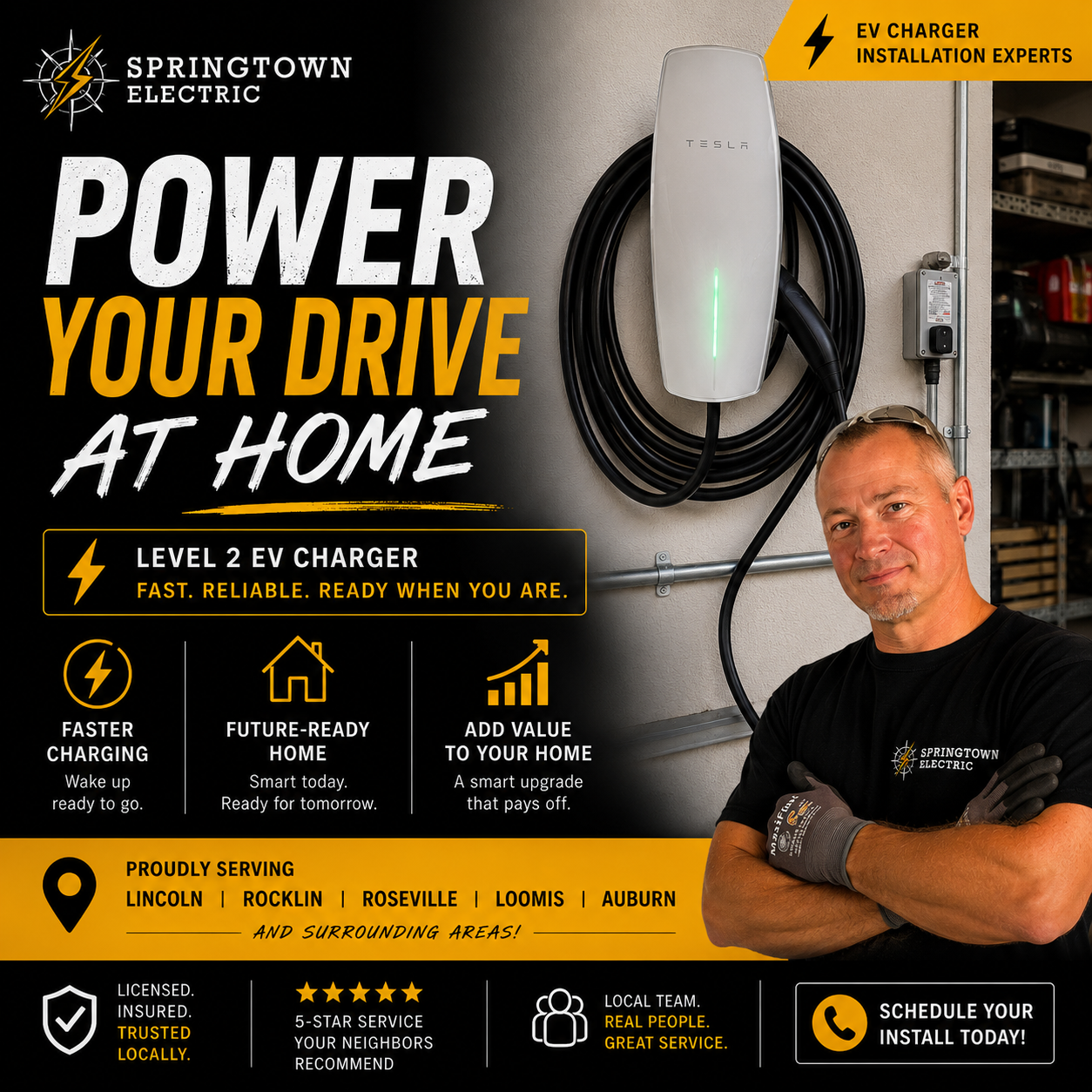
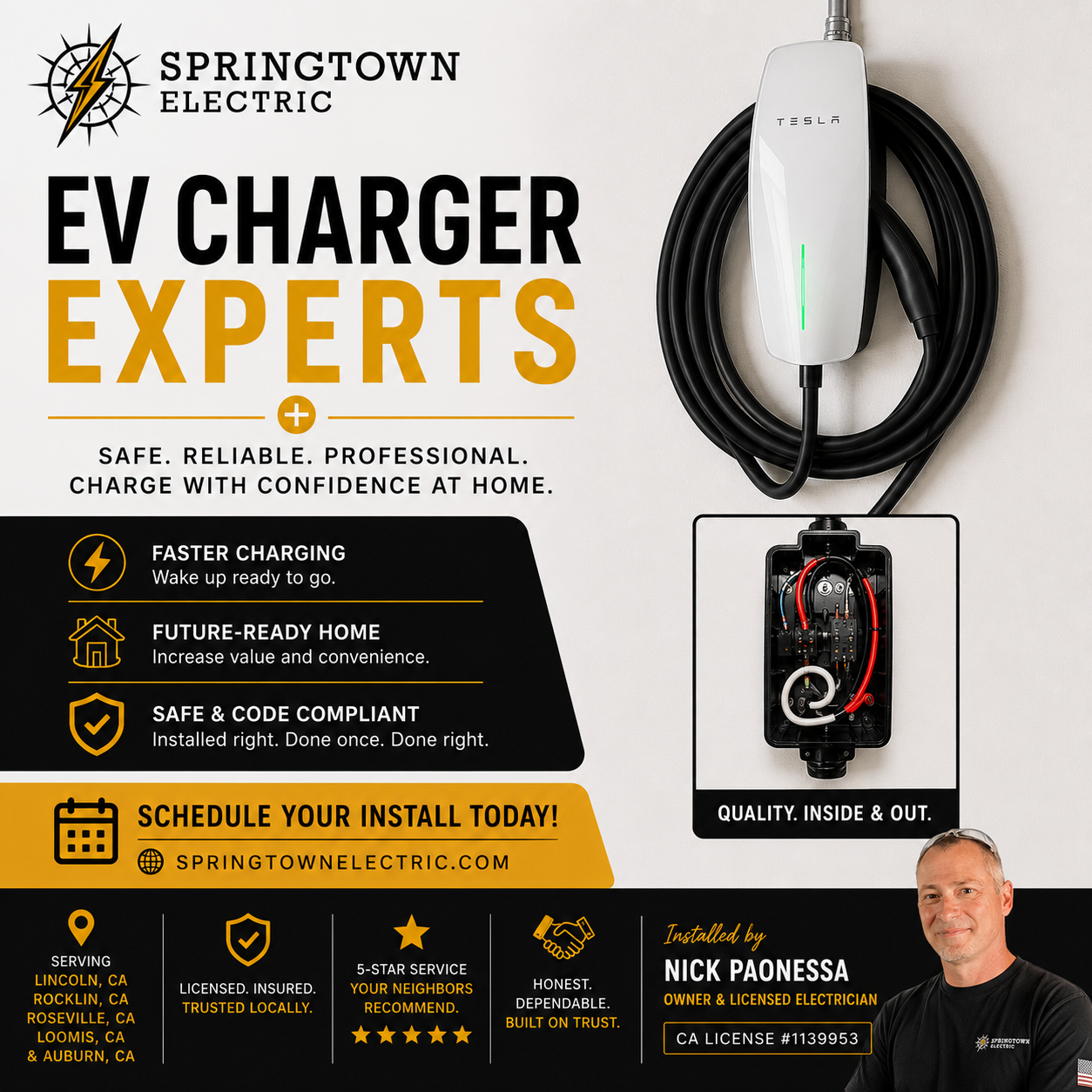
A Level 2 charger operates on 240V and can add 15 to 30 miles of range per hour, meaning most vehicles reach a full charge overnight. For daily drivers in Placer County, Level 2 is typically the practical choice. Installation requires a dedicated 240V circuit run by a licensed electrician, which is why most homeowners start with a professional assessment.
Does Your Home Electrical Panel Support a Level 2 Charger?
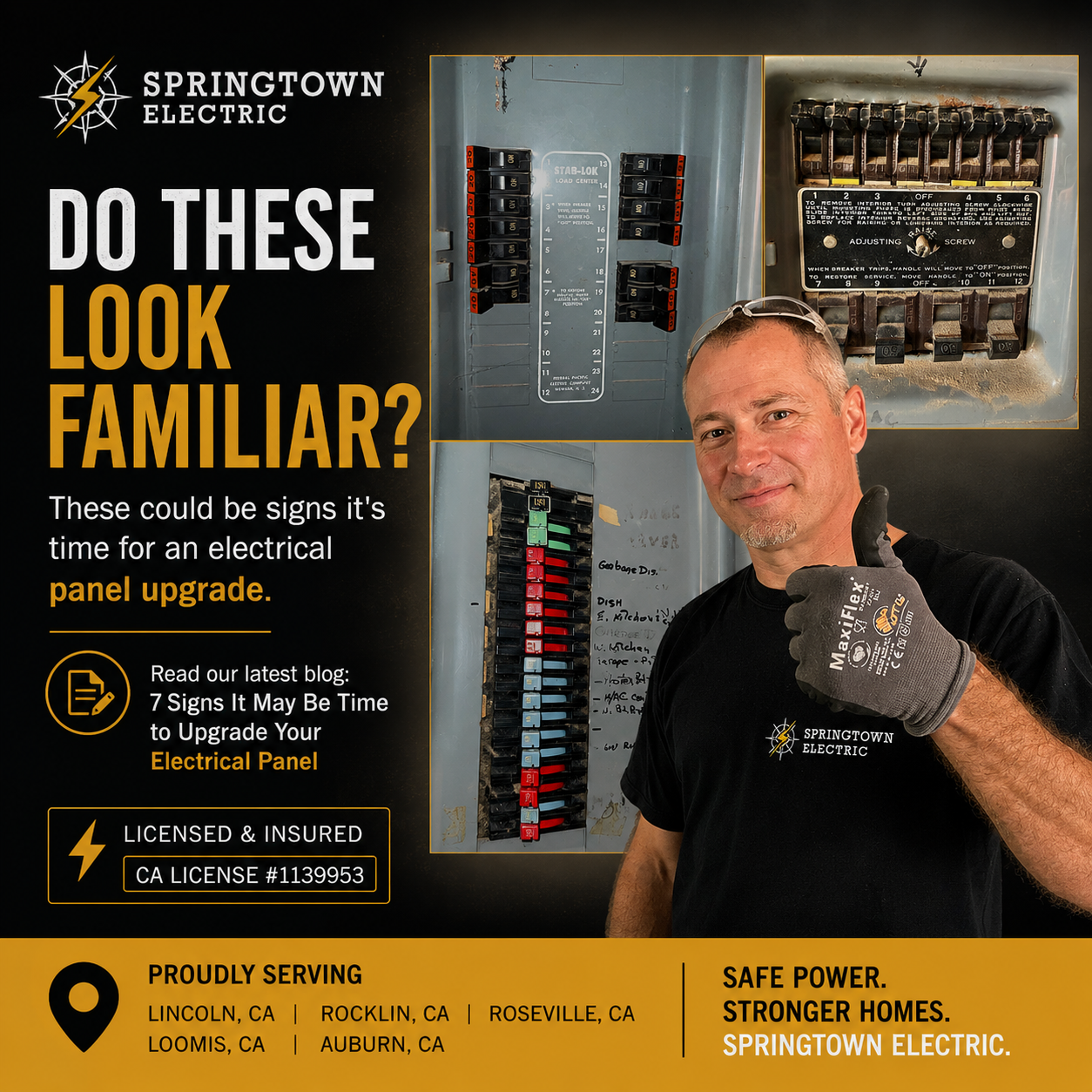
A panel capacity check is the most important step before any EV charger installation. A Level 2 charger typically requires a dedicated 40- to 50-amp circuit. Homes with older 100-amp service may accommodate a charger on a slower 24-amp circuit, but only if the panel is not already heavily loaded. Appliances like an electric dryer, central air conditioning, or an electric water heater can push even a 200-amp panel close to its practical limit. For that reason, a licensed electrician should run a formal load calculation before confirming what your system can support.
Many Lincoln homes in newer developments were built with 200-amp service and an attached garage, making them good candidates for a straightforward Level 2 installation. Older properties may need a panel upgrade first. If your panel is full, a licensed electrician may recommend a tandem breaker, a subpanel, or a full panel upgrade depending on your situation.
What Does a Load Calculation Involve?
A load calculation reviews your home's total electrical demand. An electrician measures the amperage draw of every major appliance, then compares that total to your panel's rated capacity. The goal is to confirm that adding a 40- to 50-amp EV charging circuit will not exceed your system's safe operating limit. This step is required under the California Electrical Code before a permit can be issued for a new 240V circuit.
Do You Need to Upgrade Your Panel for a Level 2 Charger?
Not always. If your panel has available breaker slots and sufficient remaining capacity, an upgrade may not be necessary. If the panel is full or rated at 100 amps or less, an upgrade is often the safer and more code-compliant path. A panel upgrade also supports additional circuits for future appliances or solar equipment.
How the City of Lincoln Permit Process Works
Every Level 2 EV charger installation in California requires an electrical permit. In Lincoln, the City of Lincoln Community Development Department offers a dedicated EV charger permit process. Under California AB 1236, cities must provide expedited, streamlined review for residential EV charging stations, with qualifying applications issued the same day or within five business days. Lincoln also participates in the Symbium online portal, which can approve plan reviews instantly for eligible projects.
Your licensed electrician will typically handle the permit application, load calculation documentation, and inspection scheduling. A final inspection by the city is required before the charger can be energized. Working with a licensed local electrician ensures permit paperwork and inspection coordination are handled correctly from the start.
What Happens if I Have an HOA?
California law generally protects homeowners' rights to install EV charging equipment even in HOA-governed communities. State law limits an HOA's ability to prohibit installations, though the association may set reasonable conditions regarding placement and aesthetics. If you live in a community such as Lincoln Crossing, review your HOA rules with your electrician before you commit to an installation location.
Tips for Choosing the Right Level 2 Charger
Level 2 chargers vary by amperage output, connector type, and smart features. A few factors are worth weighing before you buy. First, confirm your vehicle's port type, since modern EVs accept both J1772 and NACS connectors. A 40-amp charger is sufficient for most Lincoln suburban commute patterns. Smart chargers with Wi-Fi connectivity let you schedule charging during SMUD off-peak rate hours, reducing your electricity bill over time. Wall-mounted hardwired units are generally more reliable long-term than plug-in NEMA 14-50 models, though both require a dedicated 240V circuit. Finally, choose a UL-listed charger, as inspectors commonly accept these as compliant with the California Electrical Code.
Ready to Get Started With Your EV Charger in Lincoln?
Springtown Electric handles the complete EV charger installation process for Lincoln, CA, homeowners: load calculation, permit application, dedicated circuit installation, and final inspection coordination. Whether your Twelve Bridges garage is ready to go or your older Lincoln-area home needs a panel review first, the team is equipped to walk you through every step.
Call
(916) 899-2079 to schedule your assessment, or visit the
Lincoln
electrician services page
to learn more. You can also
contact us online to request an appointment. Find
Springtown Electric on Google Maps to read reviews from Lincoln and Placer County homeowners.