No Ceiling Lights in Your Living Room? What to Know Before Adding Recessed Lighting
If your living room doesn't have any ceiling lights, you've probably gotten pretty familiar with floor lamps.
That's common in plenty of homes. But if the room still feels dark, or you're tired of arranging lamps around furniture and outlets, adding recessed lighting can completely change how the space looks and functions.
The electrical work is only part of the project, though.
Before cutting holes in a ceiling, it's worth spending some time figuring out where the lights should go, how the room is actually used, and what is already behind and above that ceiling.
At Springtown Electric, that's where I like to start.
Start With the Room, Not the Lights
One of the biggest mistakes with recessed lighting is deciding on a number of lights before thinking about the room itself.
Where is the couch?
Is there a television that could catch glare?
Are there reading areas that need more light?
Is the room open to a kitchen or dining area?
Are there walls, artwork or architectural features you want to highlight?
Those questions can affect both the number and placement of the lights.
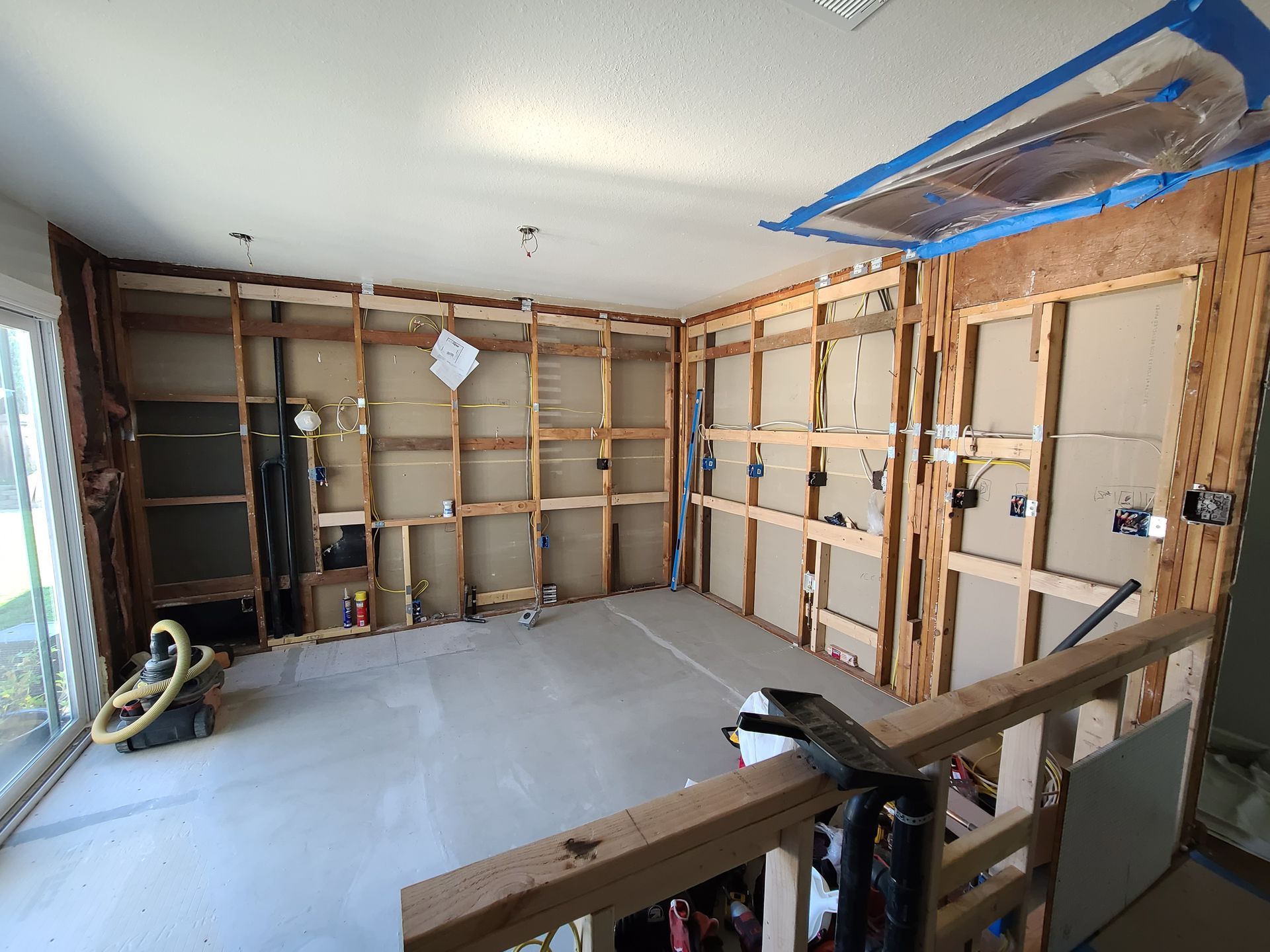
I recently worked with a homeowner whose front room had no ceiling lighting at all. We spent time measuring and talking through placement before anything was installed. The homeowner had input on where the lights would make the most sense for the room instead of simply getting a standard pattern cut into the ceiling.
That's an important part of a good lighting project.
Once the holes are cut, moving them isn't nearly as simple as moving a floor lamp.
What's Above the Ceiling Matters
The next question is what we're working with above the room.
Depending on the home, there may be attic access above the ceiling. In other situations, the ceiling may be between floors or have limited access.
There can also be joists, insulation, ductwork, plumbing and other obstacles that affect where wiring and fixtures can reasonably go.
Modern recessed lighting gives electricians more options than older installations did, but that doesn't mean every proposed location will work exactly as it looks on paper.
Part of planning the installation is figuring out what's possible before turning a good lighting idea into unnecessary ceiling repair.
How Many Recessed Lights Does a Living Room Need?
There isn't one number that works for every living room.
Room dimensions matter, but so do ceiling height, fixture output, natural light and how you want to use the space.
Six lights placed thoughtfully can be much better than eight lights installed simply because eight fit into a symmetrical grid.
The goal isn't to make your living room as bright as possible.
The goal is to put useful light where you need it and create a room that feels comfortable.
That's also why I like discussing furniture placement and how homeowners use the room before settling on the final layout.
Don't Forget About the Controls
Adding recessed lighting is also a good opportunity to think about how you want to control it.
A dimmer can make a big difference in a living room.
You might want brighter lighting while cleaning or working on something, but softer lighting while watching television or relaxing in the evening.
In the project mentioned earlier, we also added recessed lighting in the adjoining dining area and installed a dimmer after removing an older chandelier. The homeowner gained better lighting while also getting much more control over how the space feels.
Switch location and control options are worth discussing before installation rather than after everything is finished.
Does Adding Recessed Lighting Require a New Circuit?
Sometimes. Sometimes it doesn't.
That's something an electrician should evaluate based on what's already in the home.
Before adding new lighting, I want to understand the existing circuit, what else it serves and whether the planned installation can be added appropriately.
The same philosophy applies here that I use with larger electrical projects:
Look at what already exists, understand what the homeowner wants to accomplish, and then determine what electrical work is actually necessary.
Adding recessed lighting shouldn't automatically become a reason to sell a homeowner electrical work they don't need.
At the same time, if an existing circuit or another condition needs attention, it's better to discover that while planning the project than after the installation has started.
A Good Recessed-Lighting Project Is Part Electrical Work and Part Planning
For homeowners, the most exciting part is usually seeing the room after the lights come on for the first time.
A room that relied entirely on lamps can suddenly feel completely different.
Getting there successfully comes down to more than cutting several holes and connecting fixtures. A good installation considers:
- how the room is used
- fixture placement and spacing
- ceiling and attic access
- obstacles above the ceiling
- switching and dimming
- the existing electrical circuit
- how the finished installation will actually look in the room
That planning is especially important when you're adding overhead lighting to a room that wasn't originally designed with it.
Thinking About Adding Ceiling Lighting?
Springtown Electric helps homeowners in Lincoln, Rocklin, Roseville and surrounding Placer County with recessed lighting, light fixtures, ceiling fans and other residential electrical improvements.
You'll work directly with me, Nick, from discussing what you want the room to accomplish through the electrical installation itself.
If you're tired of relying on floor lamps and want to find out what adding ceiling lighting would involve in your home, give Springtown Electric a call at 916-899-2079.
Springtown Electric
Nick Paonessa, Owner/Operator
CA License #1139953