How to Choose the Right Location for a Home EV Charger
Picking the right spot for a home EV charger is one of the most important decisions you can make before installation, and professional electrician services can help you get it right the first time. More Rocklin, CA, homeowners are adding electric vehicles every year, and the question of where to mount a Level 2 charger comes up at every step.
The answer depends on your garage layout, your distance from the electrical panel, and whether you prefer an indoor or outdoor setup. This guide walks through the key factors so you can walk into your installation appointment fully prepared.
Why Charger Placement Matters More Than Most People Think
Good placement makes every charge session easier. A poorly placed charger can mean tangled cables, a cord that does not reach, a wall mount that blocks a car door, or an outdoor unit exposed to direct sun and rain. Getting placement right the first time also keeps costs reasonable, since moving a hardwired unit later involves additional labor and electrical work.
Think of location as the foundation of your whole home charging setup. Everything else, from cable length to breaker size, flows from where the charger physically sits.
What Should I Consider About My Garage Layout?
Garage size and shape drive almost every placement decision. A standard two-car garage in neighborhoods like Stanford Ranch or Whitney Ranch in Rocklin, CA, gives you more flexibility than a single-car or tandem garage.
Key layout questions to think through before calling for electrician services:
- Which wall is closest to where the charging port sits on your vehicle?
- Does the charger need to serve more than one car in the same space?
- Are there shelves, water heaters, or garage door tracks that limit wall space?
- Will the car door swing open without hitting the charger or cable?
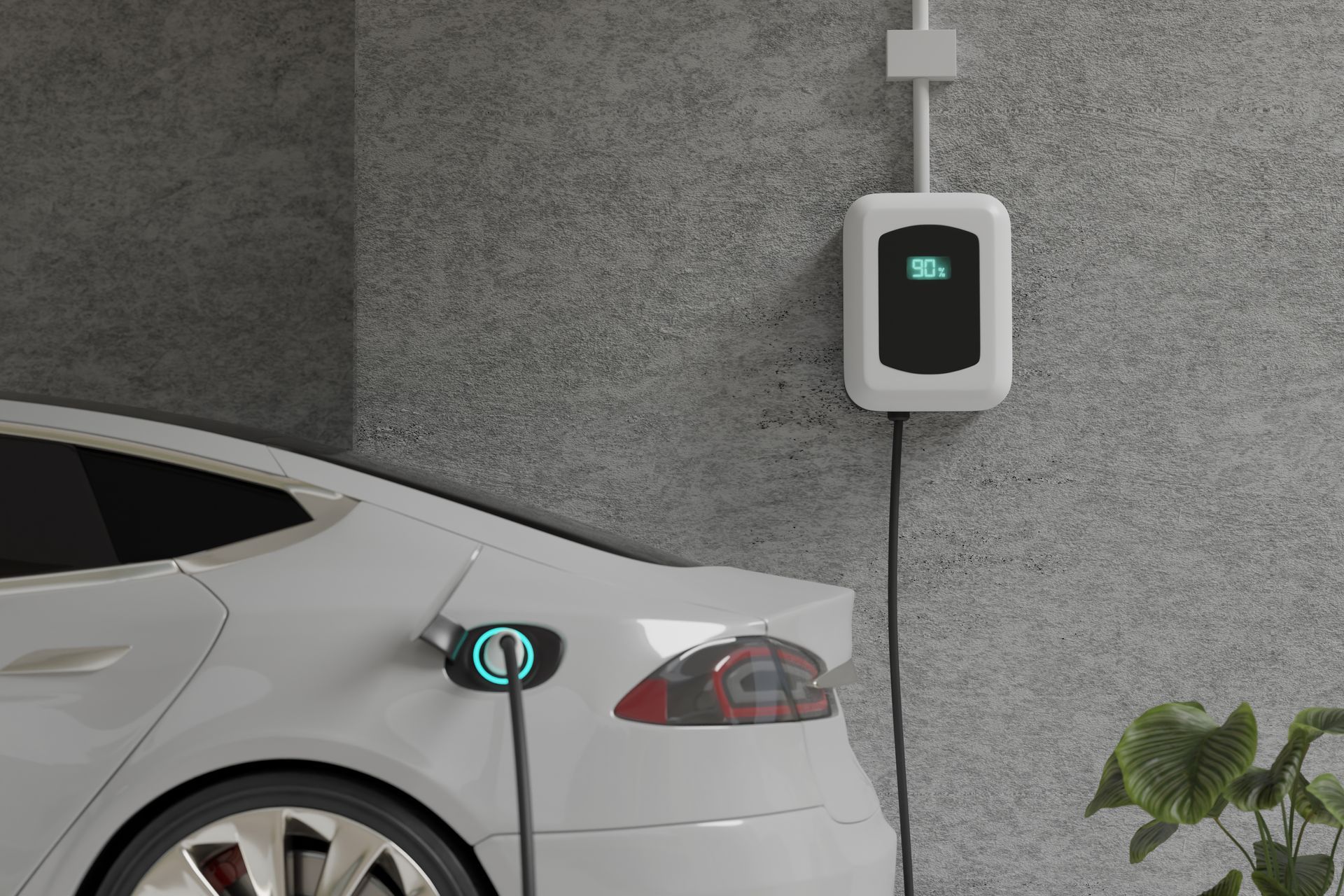
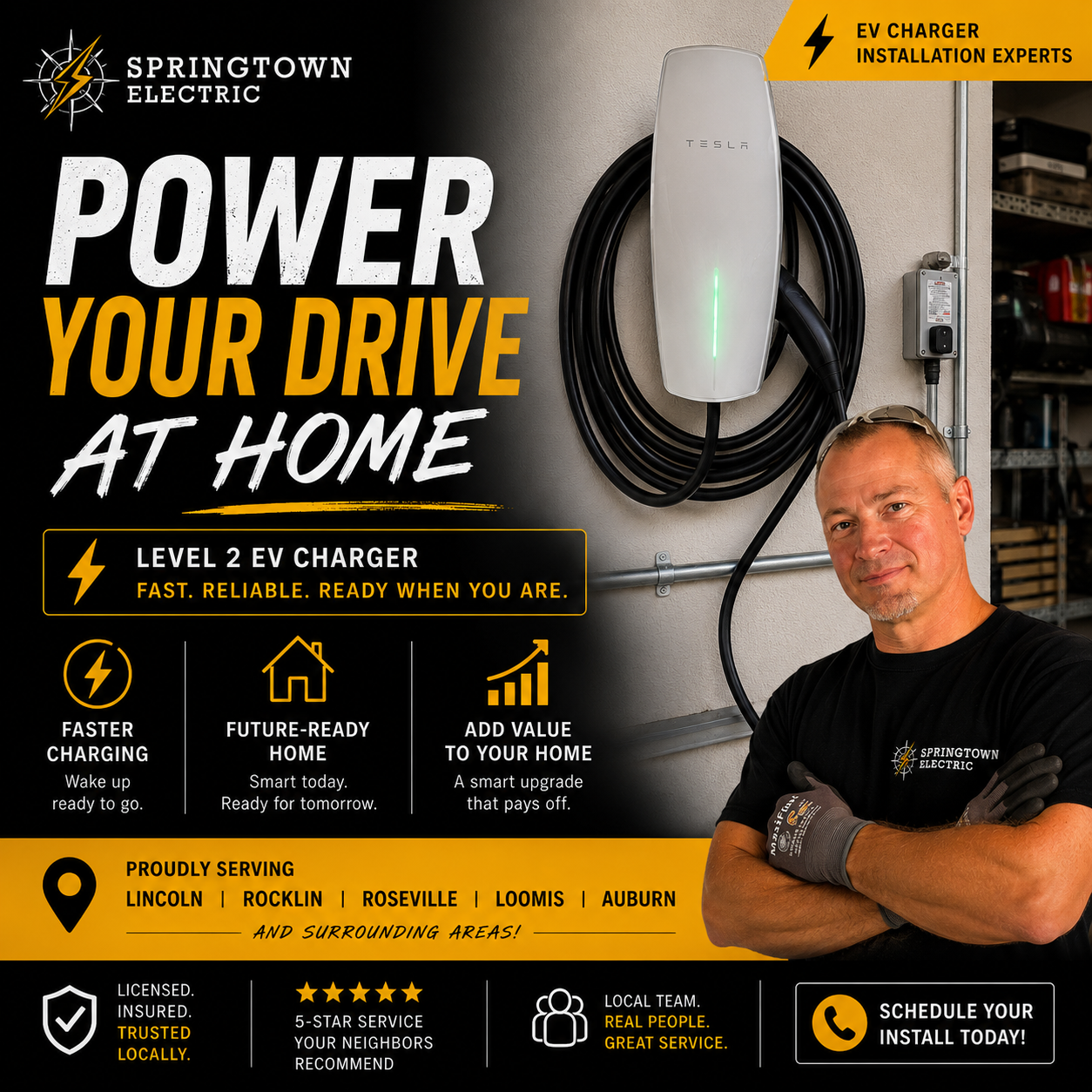
Mounting the charger on the wall closest to your vehicle's charging port reduces cable clutter and wear. Most Level 2 chargers come with an 18- to 25-foot cable, but a cable stretched across the floor is a trip hazard and can degrade over time.
Hardwired Versus Outlet-Based Installation
A hardwired charger is permanently connected to a dedicated circuit, offering a cleaner install when the location is fixed. A NEMA 14-50 outlet approach lets you plug in a mobile connector, which is useful if you may want to relocate or replace the unit later. Both options require a dedicated 240-volt circuit. Your electrician services provider can help you weigh the two based on your vehicle, your panel, and your long-term plans.
How Far Is Your Electrical Panel From the Ideal Charger Spot?
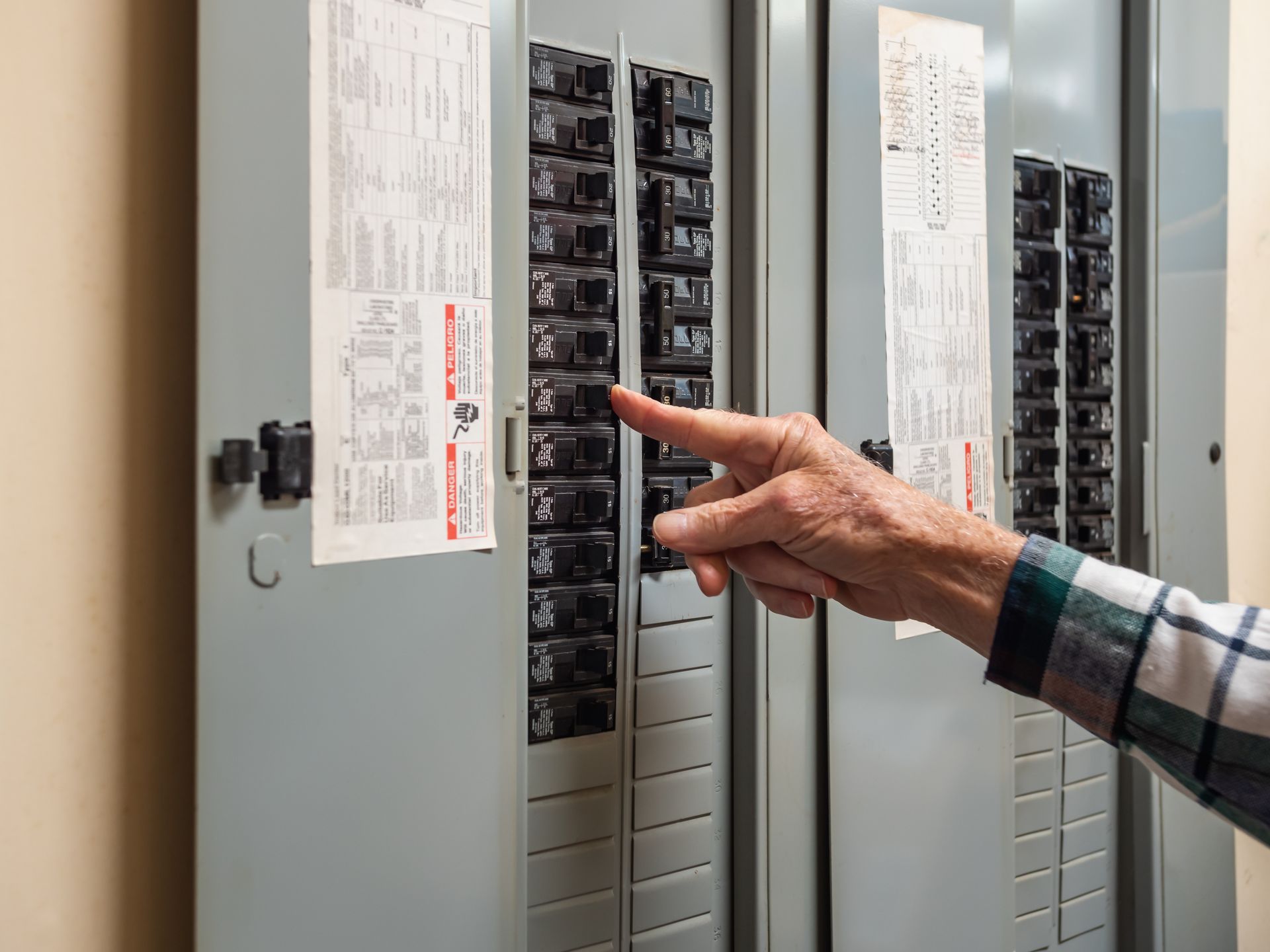
Distance to the panel is often the deciding factor in placement. The closer the charger is to your main electrical panel, the less conduit and wire run is needed. In many Rocklin homes, the panel sits in the garage or an adjacent utility room, which is ideal.
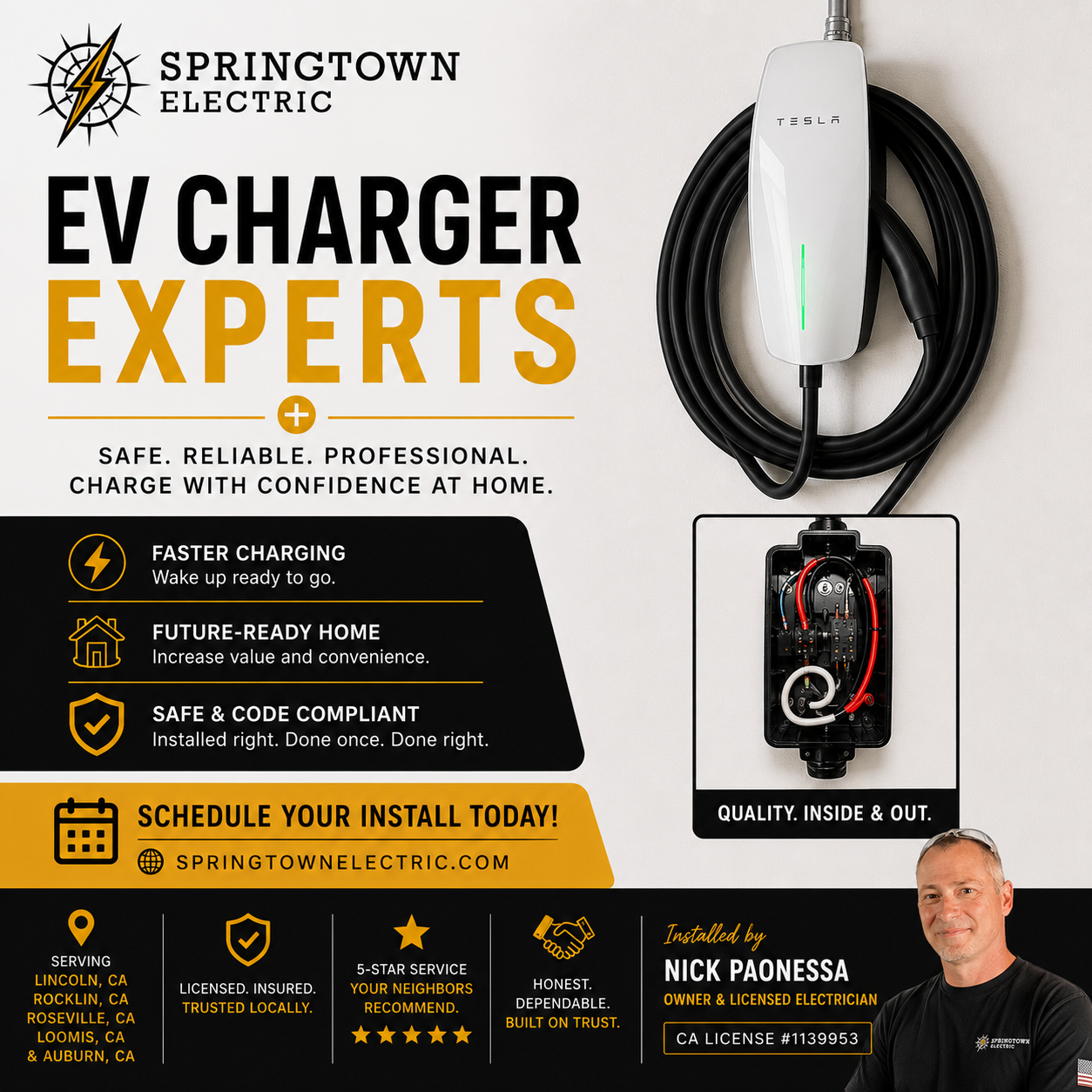
If your panel is on the opposite side of the house, the wire run increases significantly. A licensed electrician can assess the best routing path, whether through the attic, along an exterior wall, or through conduit inside the garage. Springtown Electric owner and electrician Nick Paonessa can evaluate the charger location, existing panel, and available routing options together to determine a practical installation approach for the home.
Some homes in Placer County may also need a panel upgrade before a Level 2 charger can be added. Older panels or those already near capacity may not have a free 240-volt breaker slot available for the dedicated circuit a charger requires.
Indoor Versus Outdoor Charger Placement
Most Rocklin, CA, homeowners install their charger inside the garage, and that is usually the simplest option. Indoor units face less weather exposure, which can extend equipment life. Outdoor placement is sometimes the better choice, particularly if you park in a driveway, carport, or detached structure.
If you go outdoor, choose a charger rated for outdoor use (look for a NEMA 3R or 4 enclosure rating) and mount it under an overhang or in a covered area whenever possible. Rocklin summers run very hot, and direct afternoon sun on electronic equipment day after day is hard on the hardware.
Can My Current Panel Handle an EV Charger?
Level 2 chargers operate on a dedicated 240-volt circuit, but the circuit size and charging output can vary depending on the charger, vehicle, and electrical capacity available at the home. Adding a Level 2 charger does not automatically mean the electrical panel needs to be replaced. The home's existing capacity and available breaker space should be evaluated before determining what work is actually needed. If your panel has the capacity and an open breaker slot, the job may be straightforward. If not, a panel upgrade may be part of the conversation. Qualified electrician services can evaluate your current panel load before any work begins, so you know exactly what to expect.
What Permits Are Required in Rocklin?
EV charger installations in Rocklin, CA, generally require a building permit and electrical inspection through the City of Rocklin's building department. A licensed electrician handles permit pulling and coordinates the inspection on your behalf. Work done without permits can create problems during a home sale or insurance claim, so doing it properly from the start matters.
Ready to Plan Your EV Charger Installation in Rocklin?
The right placement makes every charge session smoother and protects your investment over time. If you are ready to get a professional opinion on the best spot for your home charger, Springtown Electric is available to serve Rocklin, CA, homeowners with experienced, licensed electrician services. Visit the Rocklin service page to learn more, or call (916) 899-2079 to schedule your consultation.
Springtown Electric
Nick Paonessa, Owner/Operator
CA License #1139953